Secret Escapes
Helping Secret Escapes scale AI capability across 12 functions

The brief
Secret Escapes is one of Europe’s best-known members-only travel platforms, matching hand-picked hotel and holiday deals to millions of subscribers. A competitive market had led the leadership team to set a goal of 3x delivery speed by the end of the year.
Much of the specialist knowledge needed to hit that goal already sits inside individual teams. Sales managers know what makes a listing convert; finance knows the quirks of reconciling bookings across systems. AI gives people like this the ability to build their own tools, agents and workflows for their own problems, without waiting on a central product roadmap.
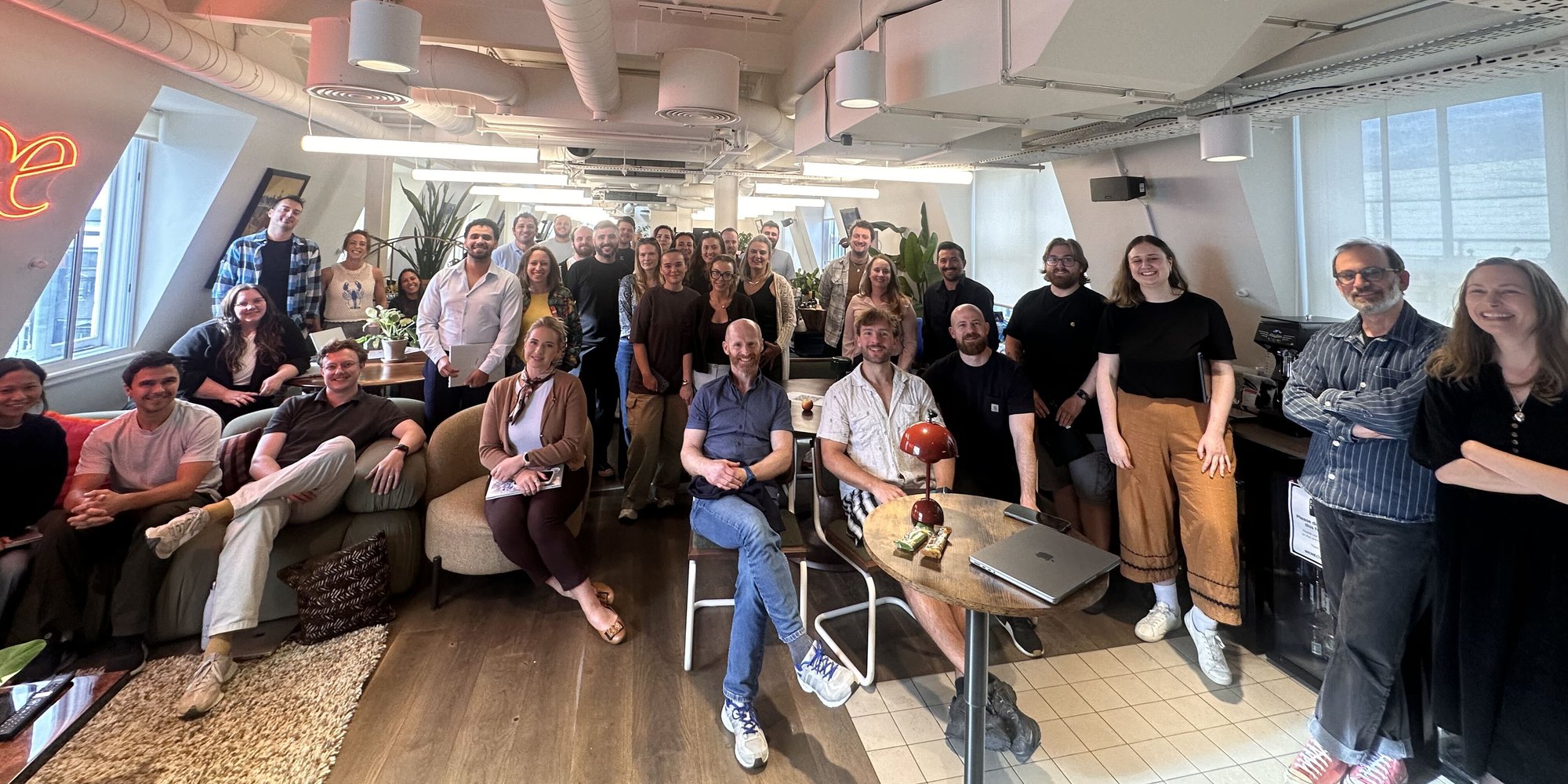
Secret Escapes selected 34 “AI champions” across 12 functions to lead AI capability inside their teams. Some were already experimenting and building; many had no clear route from curiosity to something they could rely on day to day. Loomery was brought in to close that gap over a six-week project, culminating in an in-person Hack Week where every champion shipped a working tool.


Project summary
Over six weeks, we measured every champion’s starting point on capability and security, built a training programme with a custom NotebookLM alongside it, and prioritised hack ideas with each team. That all led into five days in Secret Escapes’ London office, where the champions built, demoed and shipped a working tool each, and came out with a plan for taking it further.
Project in numbers
34
champions trained across 12 functions
115+
hours a week saved across the business
58%
of champions moved up at least one capability level
Getting champions ready before the week
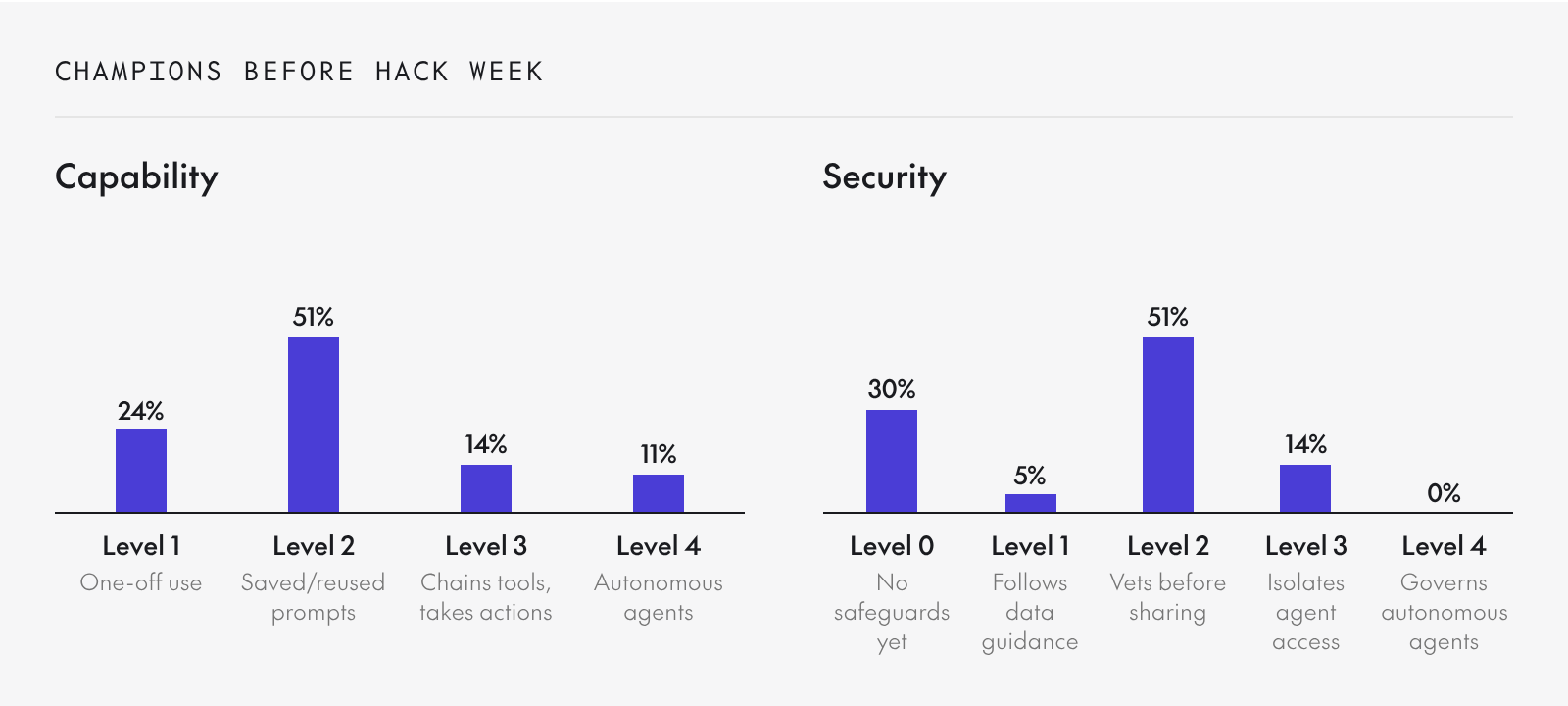
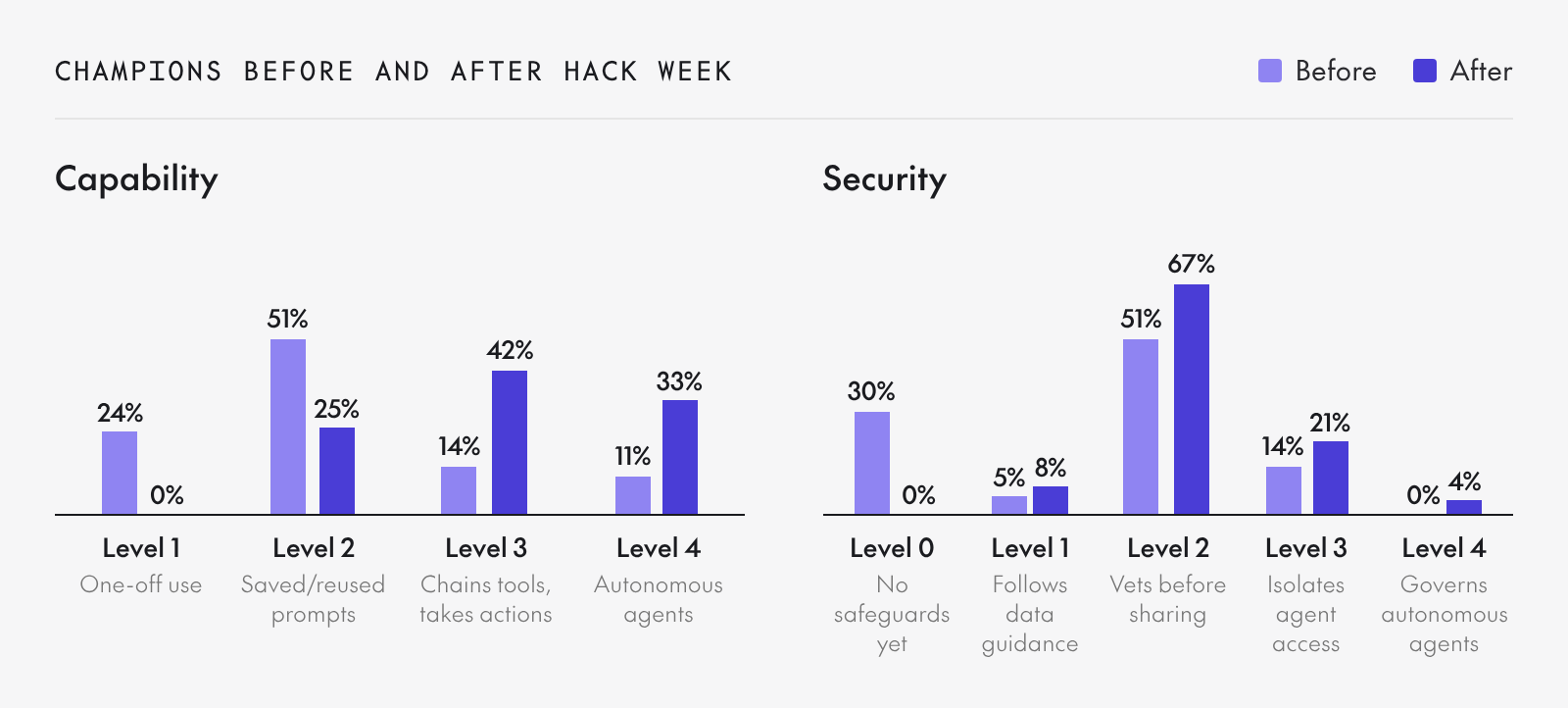
We started by placing each champion on Loomery’s AI maturity spectrum, giving us a baseline for both capability and security. Most of the cohort sat near the beginning on capability, and around a third had no basic security safeguards in place.
From there we built training modules with plain-English explanations of the essentials: LLMs, context windows, tokens, prompt engineering, guardrails and agents, alongside the Claude and Gemini features champions were most likely to use in their day-to-day workflows (projects, gems, skills, artifacts and canvases). Two further modules covered where AI actually adds value, and how to use it safely.
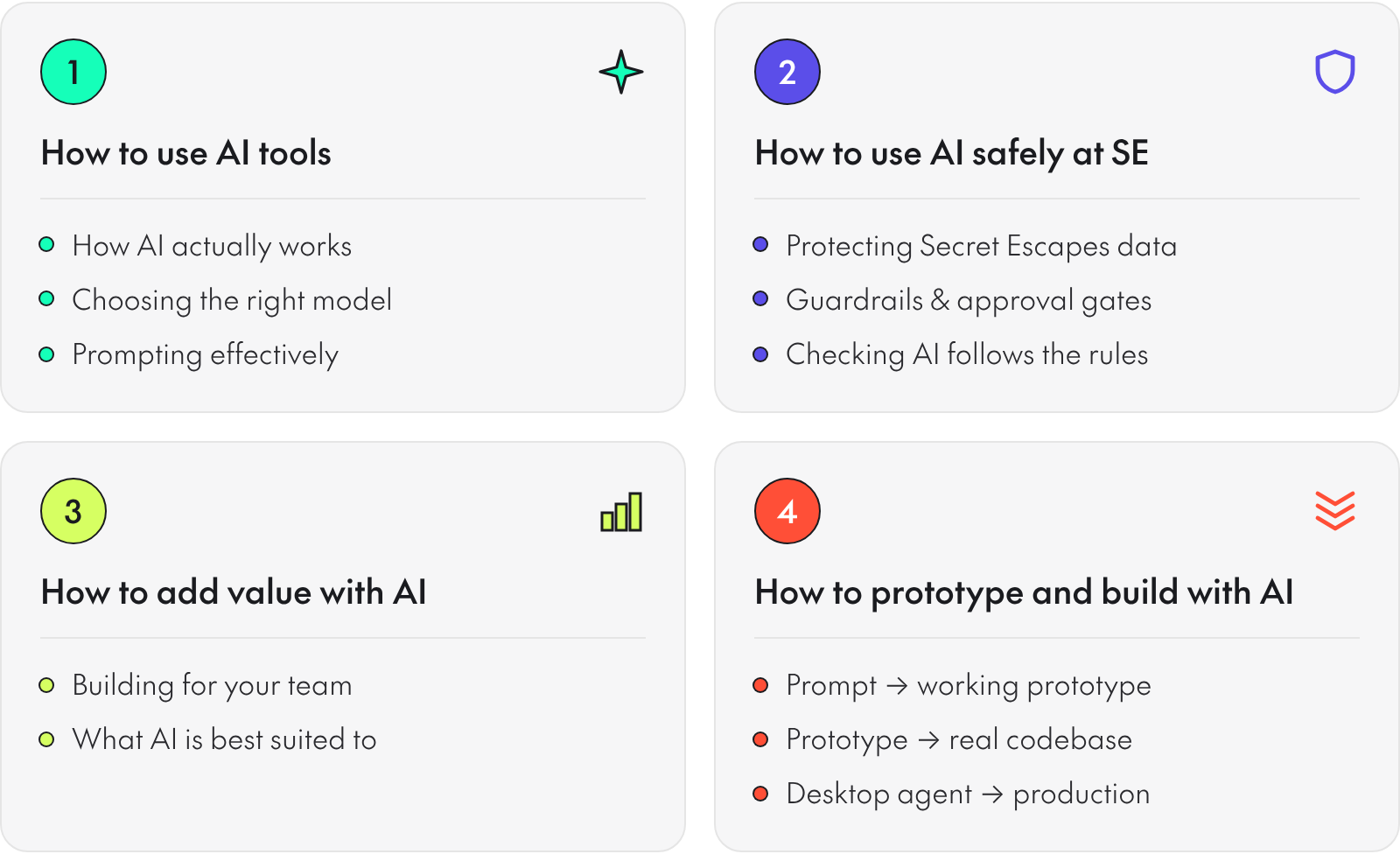
A custom NotebookLM sat alongside the training material, so champions could query it on their own terms and generate their own learning resources, rather than filing a document away and forgetting about it.
Hack ideas were prioritised for business impact and hack suitability before the week began, so the five days could be spent building rather than deciding what to build.
The week ran like a product sprint
The champions travelled in from the UK, Germany and Poland to Secret Escapes’ London office for the week. They kicked off and planned on Monday, prototyped through trial and error on Tuesday, committed to an approach on Wednesday, and refined and finished on Thursday, with demos in front of the whole Secret Escapes team on Thursday afternoon and a retro and prizegiving on Friday.
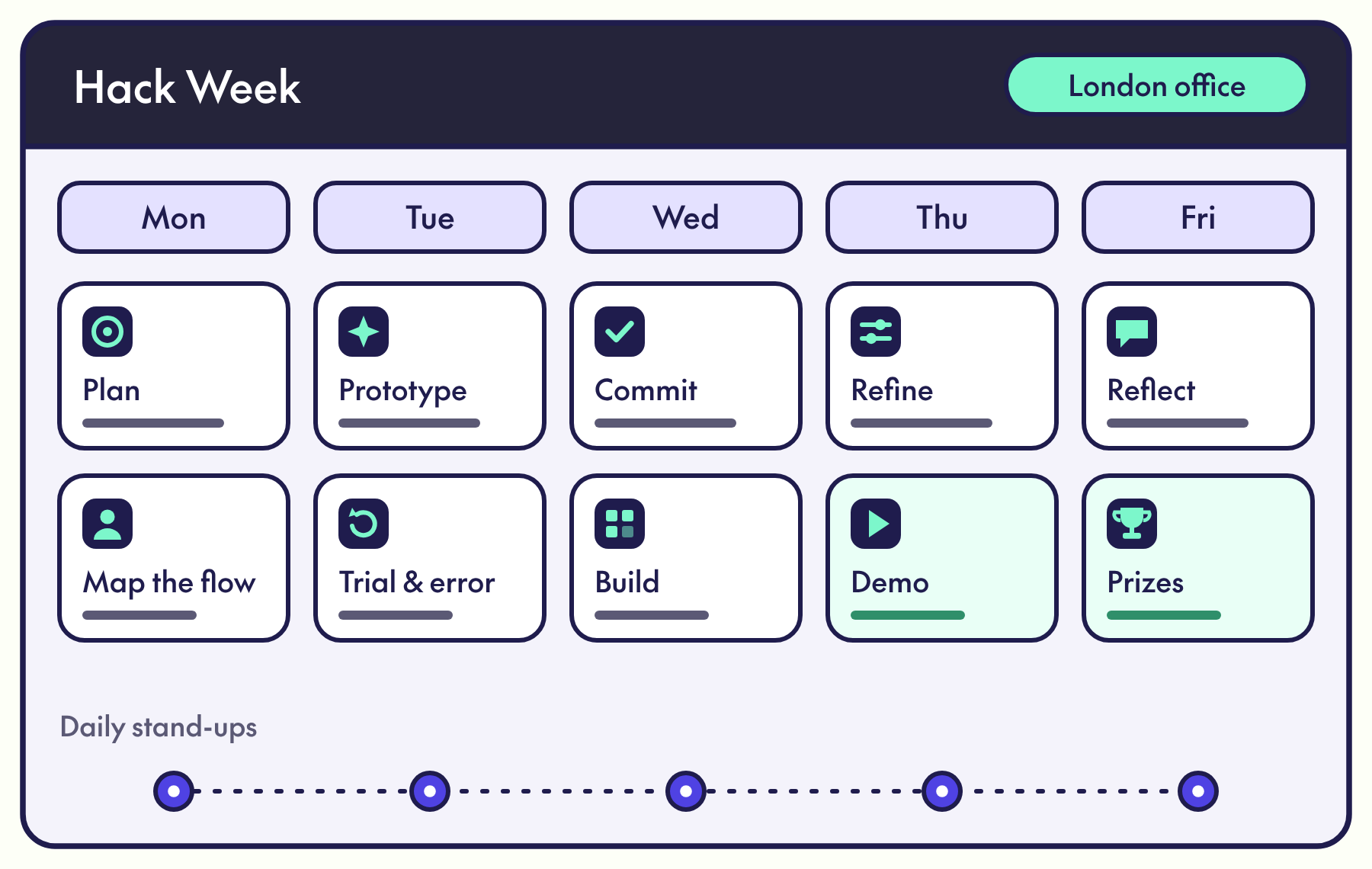
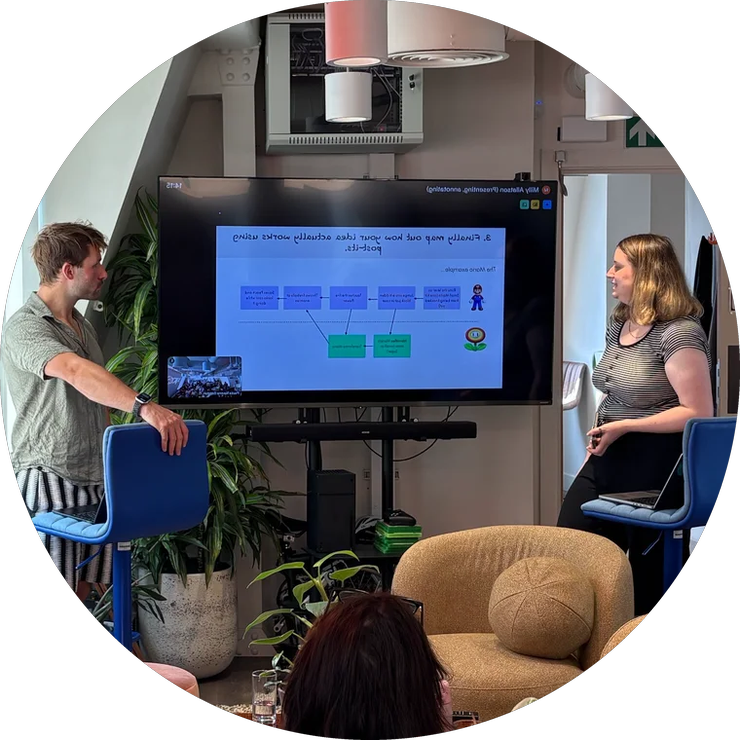
Every champion started from a Loomery template prompt, before settling on which model best fit the problem they’d chosen. Monday afternoon paired a short AI-101 recap with a structured idea-planning exercise: each champion mapped their end user and the outcome they were driving toward, then played it back to their team.
Every team ran a stand-up each morning, to help each other out and hold each other to account, with Loomery holding drop-in office hours throughout the week. It was structured enough to keep momentum going, and loose enough to let a genuine range of tools emerge.
“The demos were very inspiring, seeing what people were able to create. Mind-blowing in some ways.”
— Champion, Finance team
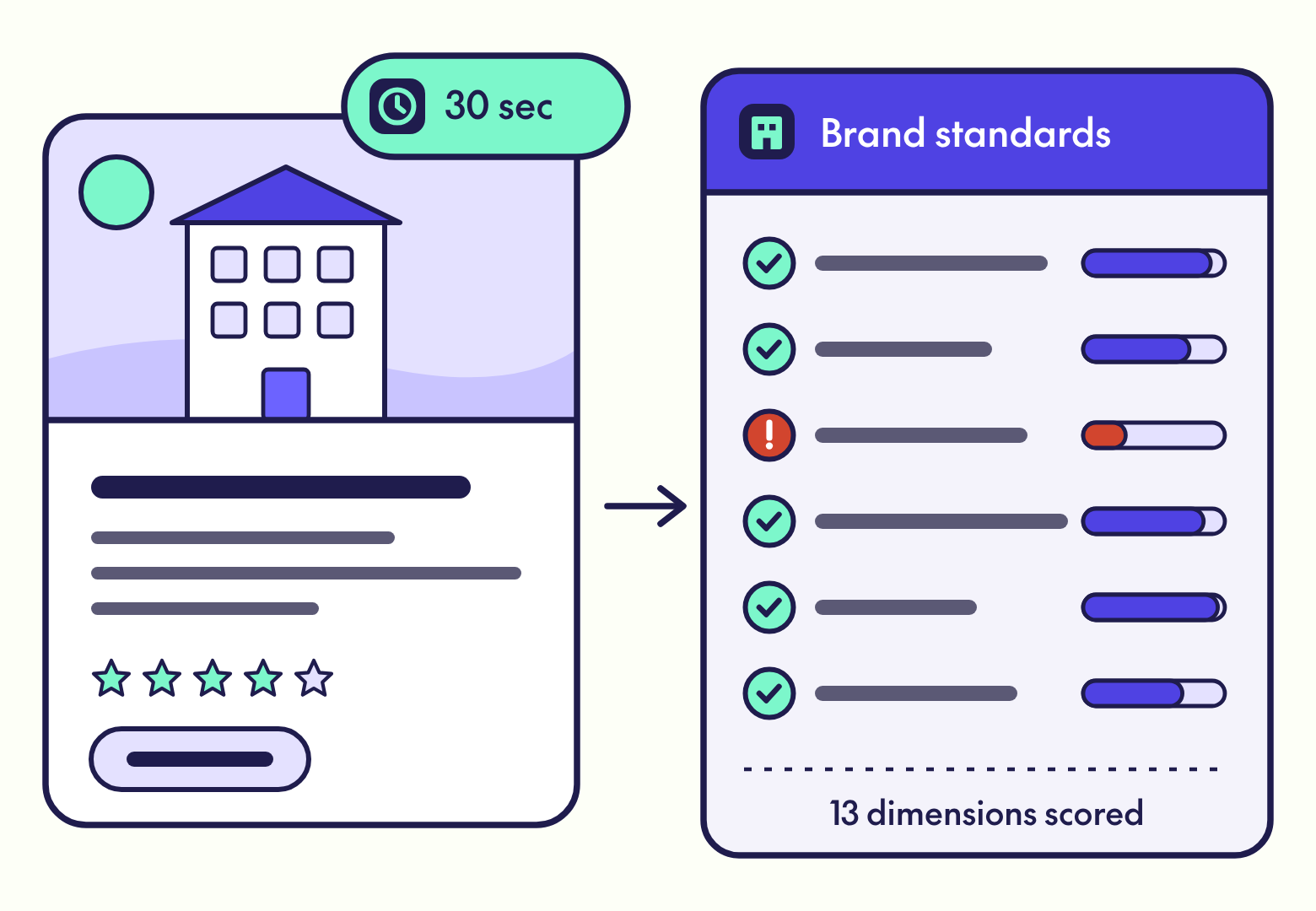
Hotel listing brand-standards checker
One champion built a tool in Claude that checks a potential hotel listing against brand standards in about 30 seconds, scanning dozens of comparison sites and competitor platforms and scoring the listing across 13 dimensions. A Sales Manager can now catch a weak listing before it goes anywhere near a member.
Automated monthly finance reconciliation
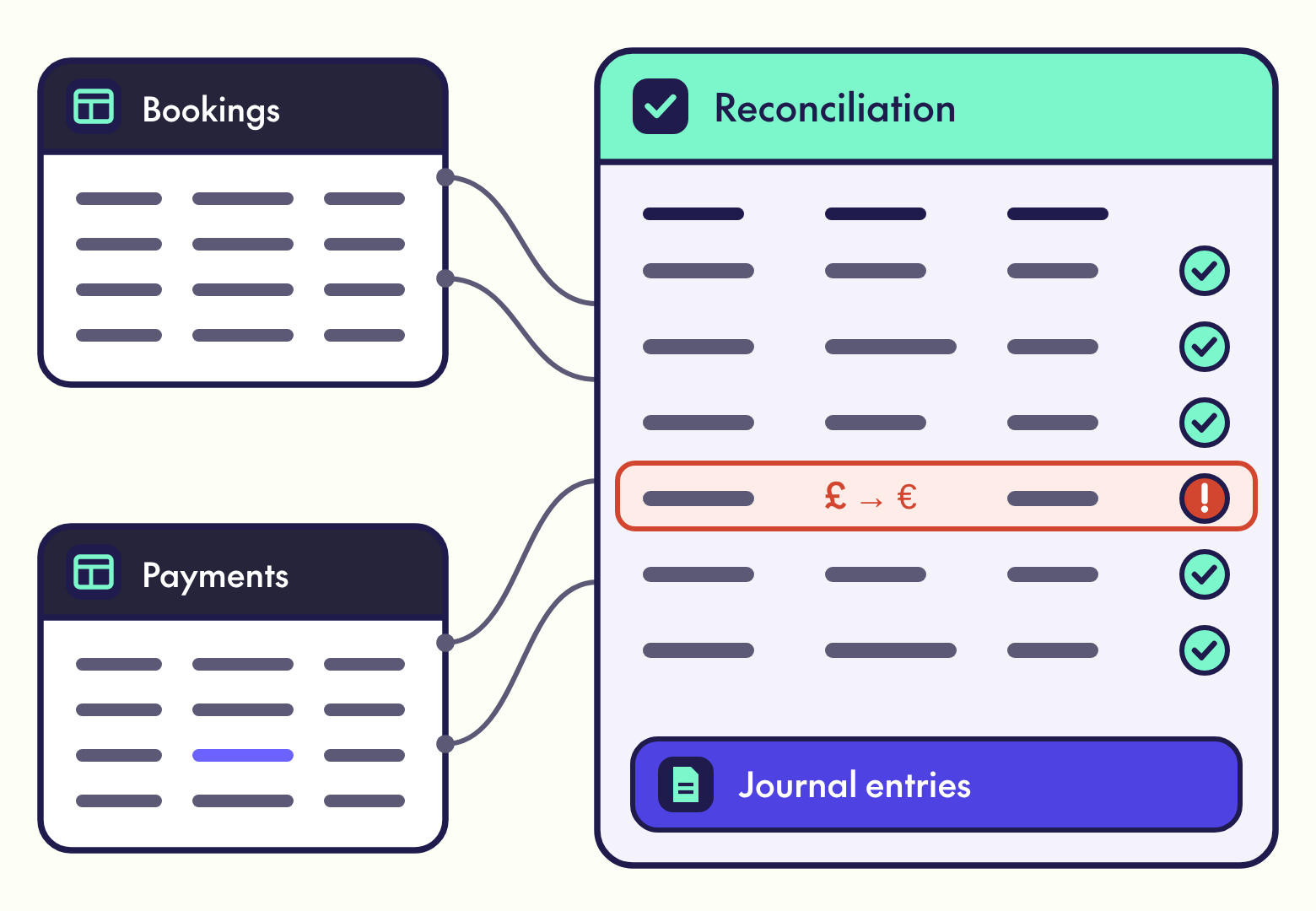
Another champion built a spreadsheet template with Claude and Gemini that automates a monthly piece of finance admin, reconciling bookings across systems and generating the journal entries for each one, work that previously had to be done by hand. In building it, they caught two errors, including a booking posted in the wrong currency. The new process is more accurate than the one it replaced, not just faster.
Help-desk chatbot for hotel connectivity
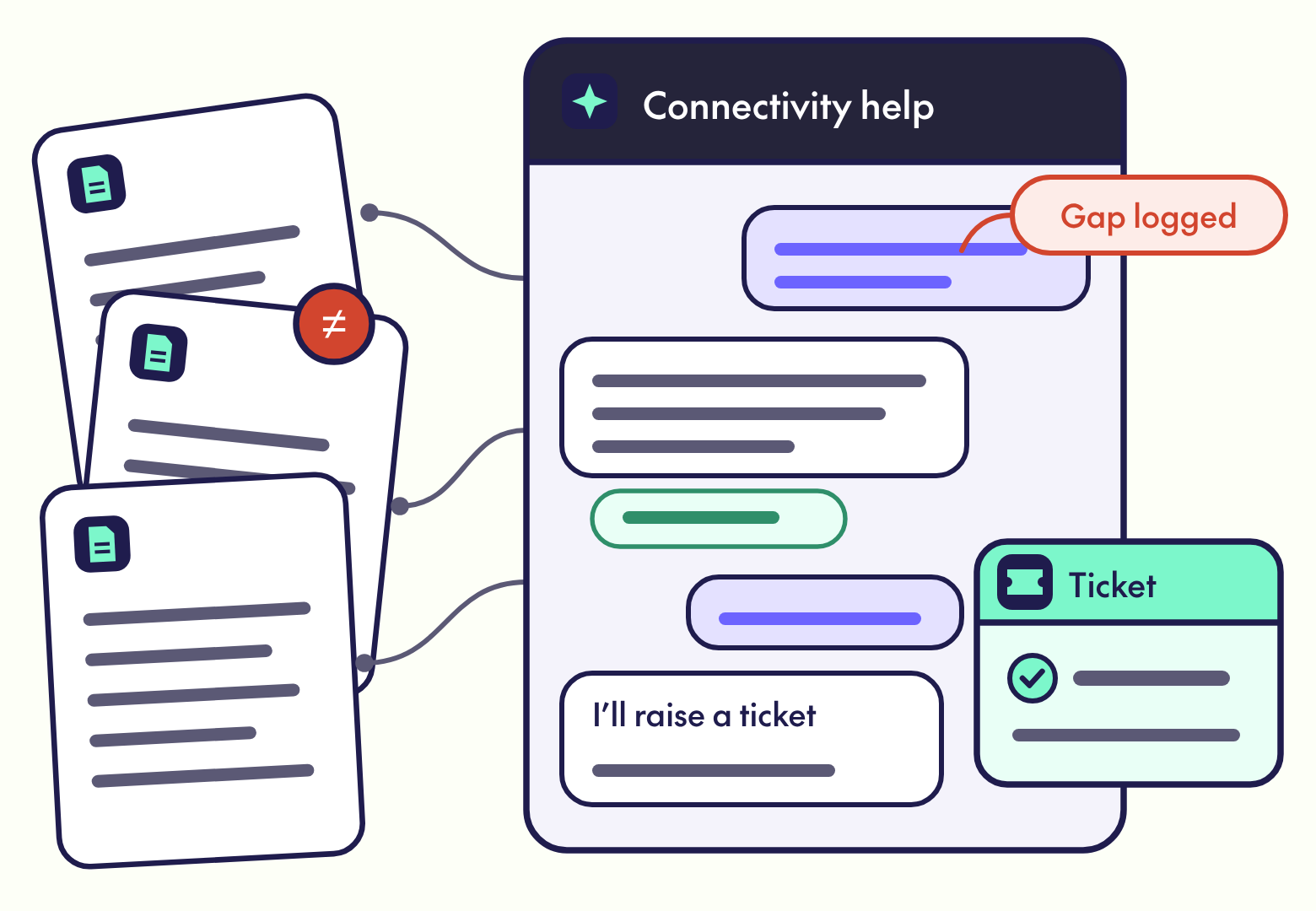
A third champion built a help-desk chatbot, deployed inside Secret Escapes’ existing Workspace so there was nothing new to host or log into, that answers connectivity questions from dozens of internal documents and raises a ticket automatically when it can’t. Cross-checking those documents against each other actually surfaced contradictions in the source material, some of them costing money. Every unanswered question is now logged, giving Secret Escapes a running view of where its own documentation has gaps.
Real business problems, solved in lasting ways
The tools built across the week ranged widely, from procurement and negotiation assistants to sales prospecting tools, campaign and margin dashboards, and finance automation. The strongest of them saved real time, but they also surfaced things Secret Escapes didn’t know it needed to know.
“What we really valued from Loomery was the expertise, and that they tailored it to our business. It wasn’t ‘here’s what we’ve run for company A, B, C and D, we’ll run it exactly the same.’ They got into the mindset of what problems we wanted to solve.”
— Gianni Raftis, Director of Data, Data Science and Analytics
What the week changed and revealed
58% of champions moved up at least one AI capability level over the week, and the share at the two highest capability levels tripled, from 25% to 75%. Security awareness moved just as clearly: 50% moved up a security tier, and the share at the top two tiers nearly doubled, from 14% to 25%.
The week also left Secret Escapes with a clear view of what to invest in next. The biggest blocker teams hit wasn’t skill, it was data access. Manual CSV exports were good enough to prove an idea, but live connectors into internal systems are the logical next step, and Secret Escapes now knows exactly which systems to start with. They’re also investing in a deployment playground to allow anyone in the business to easily host AI tools in a safe, sustainable way.
“It’s a bit of a luxury to be able to put aside time from your BAU and really concentrate on something. It’s not that I couldn’t have done that, it’s that you never feel like you can because you have to be reactive. Knowing you can just dedicate the time to sit in a problem and figure it out, that’s been great.”
— Champion, Marketing team
Conclusion
Secret Escapes’ champions are already turning into teachers, and the training materials from the week are being rolled out more widely to support teams beyond the original 34. Champions asked for monthly hack days off the back of it, keen to keep the momentum going rather than let it fade after one big week, so Loomery built an “AI Hack Day” toolkit to equip the champions with what they need to become coaches for their teams. Secret Escapes now has a practical, self-sustaining route to scaling AI capability well beyond this first cohort.
“External support can often feel transactional and formulaic. Loomery felt like an extension of our team: a true collaborative partner who tailored the content and approach to where we were and how we work.
Most hack weeks end with a demo day and a folder of prototypes nobody touches again, this one ended with tools our teams are still using. We now have a group of confident, enthusiastic advocates across every function, plus the toolkit and framework to scale this to every team. That’s critical if we’re to hit our 3x ambitions.”
— Ben McLellan, Product Director