A global procurement and spend management platform
Setting a north star for procurement in the agentic era

The brief
A global procurement and spend management platform, trusted by organisations across the public and private sector, had built a broad and capable suite over more than two decades of growth, including a number of acquisitions. That breadth was a real asset, but it had led to a disjointed user experience, and the leadership team saw an opportunity to bring it together into one coherent, modern platform, and knew it was time to think boldly about what came next.
The brief to Loomery was clear: define the vision for the next generation. Rather than an incremental update, the team wanted a genuine north star that balanced what users actually needed with what was technically achievable, and gave the client's teams the inspiration and direction to build towards it. The ambition was a platform that felt proactive, effortless, and productive; a tool that anyone could use with confidence from day one.


Project summary
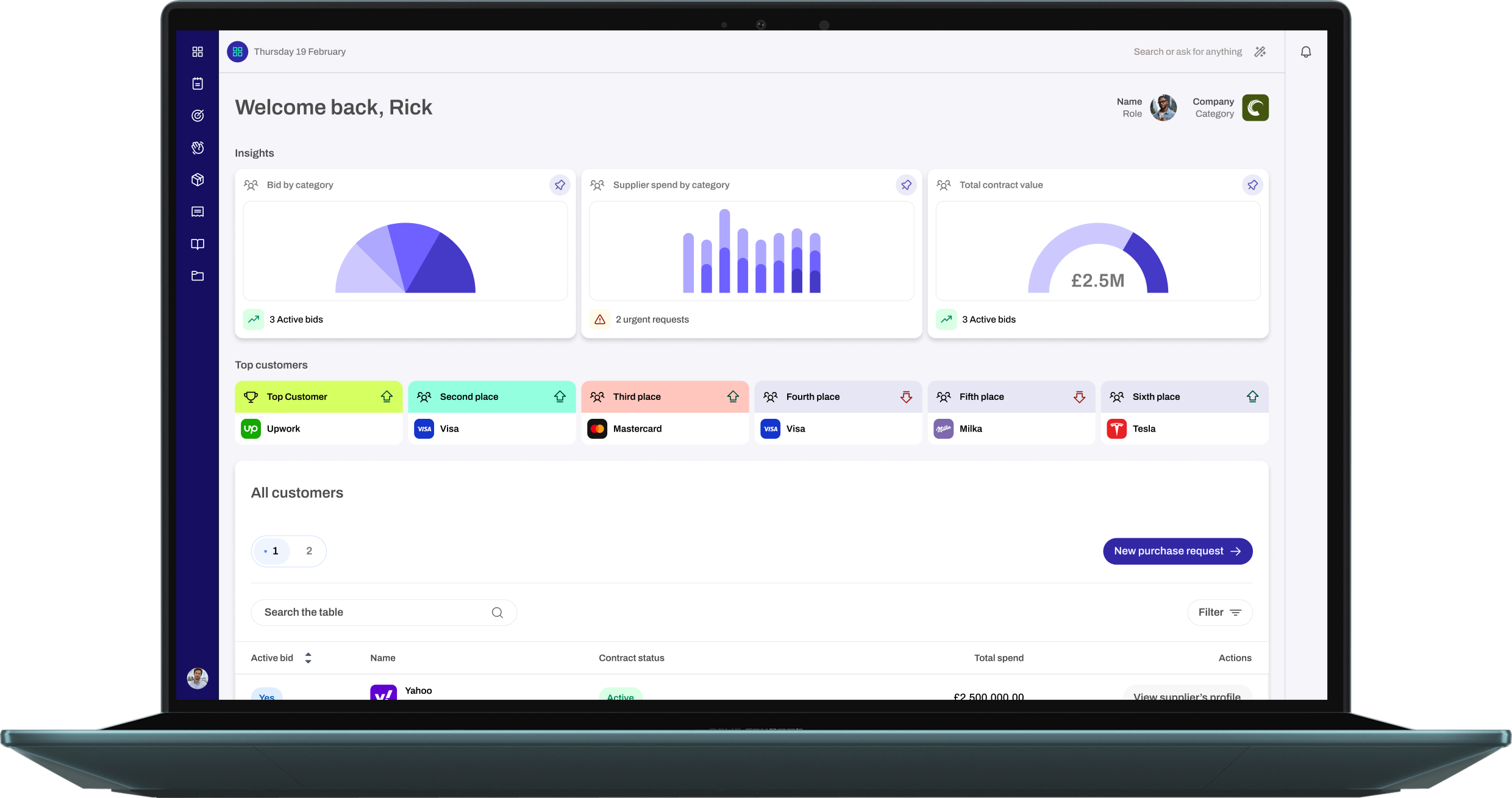
A product manager and two designers from Loomery worked in close partnership with the client's VP of Product, Head of Delivery, and Head of Architecture to define the vision. Together we ran discovery, redesigned end-to-end journeys across the full source-to-pay lifecycle, and delivered a comprehensive set of user journeys bringing the new vision to life, an interactive prototype and a new design system, giving the client the foundation it needed to move from vision into build.
Project in numbers
9
Personas mapped across procurement teams, purchasers, suppliers and finance
23
User journeys designed from scratch
11
In-depth interviews with power users and ICP prospects
Understanding users and the market
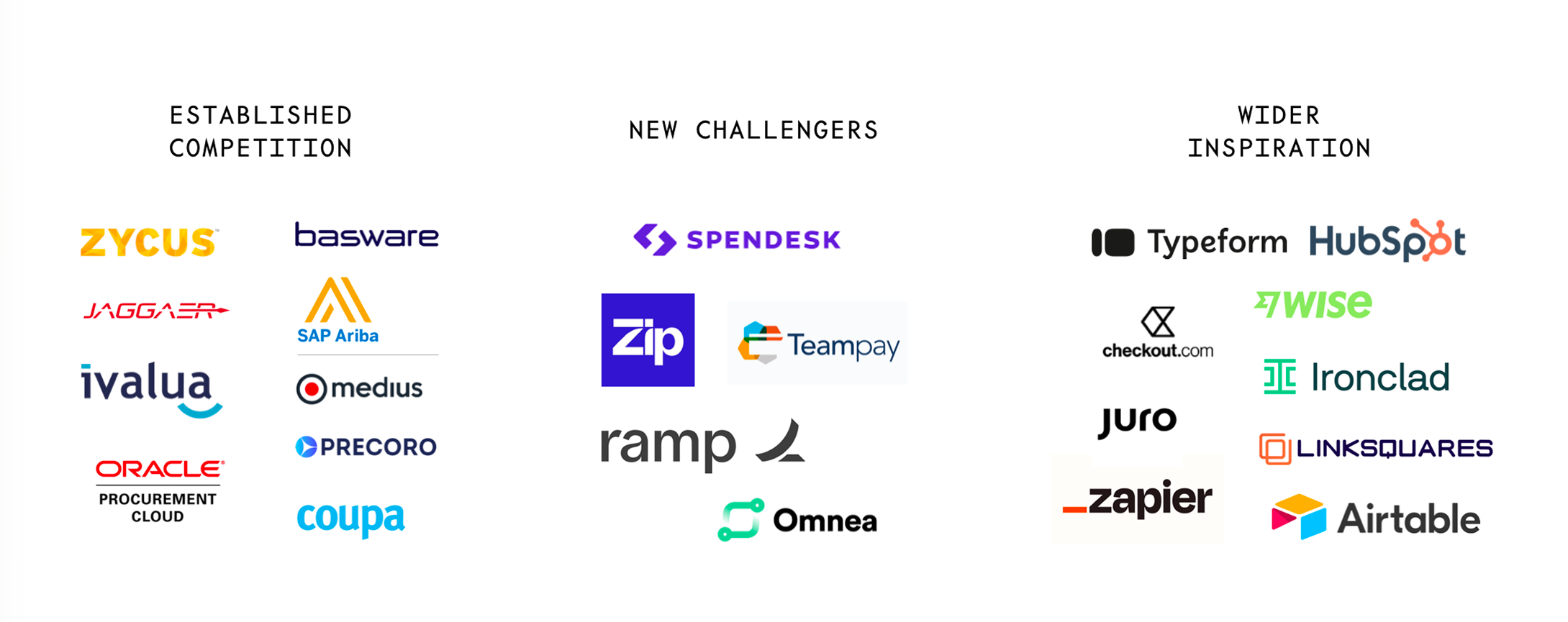
We started by getting hands-on with the current suite of products, through hands-on demos and exploration, before turning outward to map the competitive landscape. We reviewed established players and newer challengers across the procurement software category, identifying patterns in how the best tools were evolving and where the platform had an opportunity to differentiate. We also looked at best-in-class SaaS more widely, in categories like relationship management and legal tech, to see what excellent looked like outside procurement.

From there, the work became hypothesis-led. We ran in-depth interviews with 11 people: existing power users, plus potential new users who fit the ideal customer profile. Each interview tested hypotheses we'd formed from stakeholder interviews, product suite exploration, and competitor research, so we could validate the friction points before designing around them.
What we learned
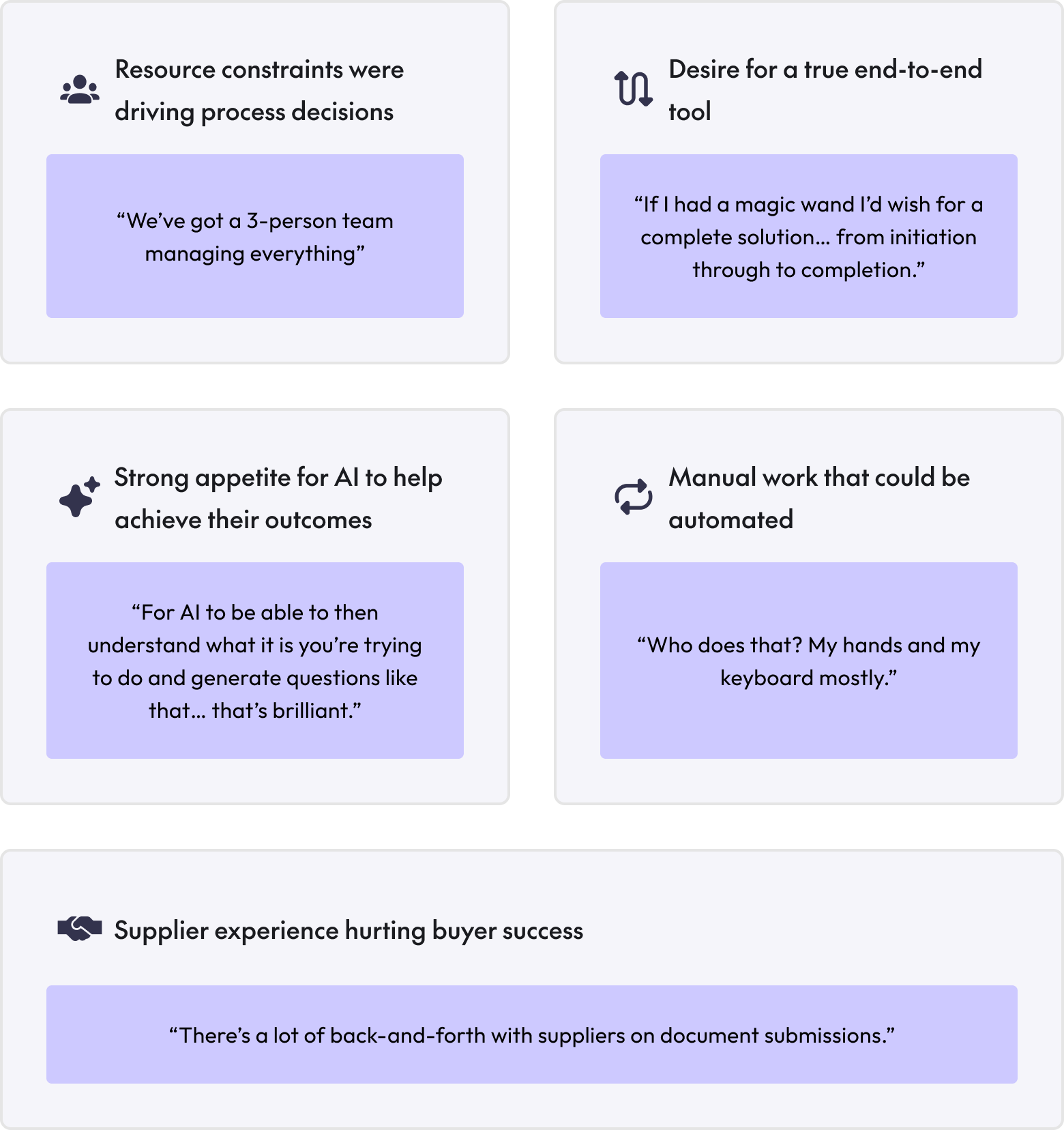
What we learned in interviews fed directly into a set of user personas, which we used to anchor the journey redesign that followed.
Journey redesign
With personas in hand, we began to tackle the redesign one capability area at a time. Working across 6 vertical slices of the journey: Supplier Relationship Management, Sourcing, Contract Management, Purchase-to-Pay, Marketplace, and Invoice Management, we designed 23 end-to-end journeys in total.
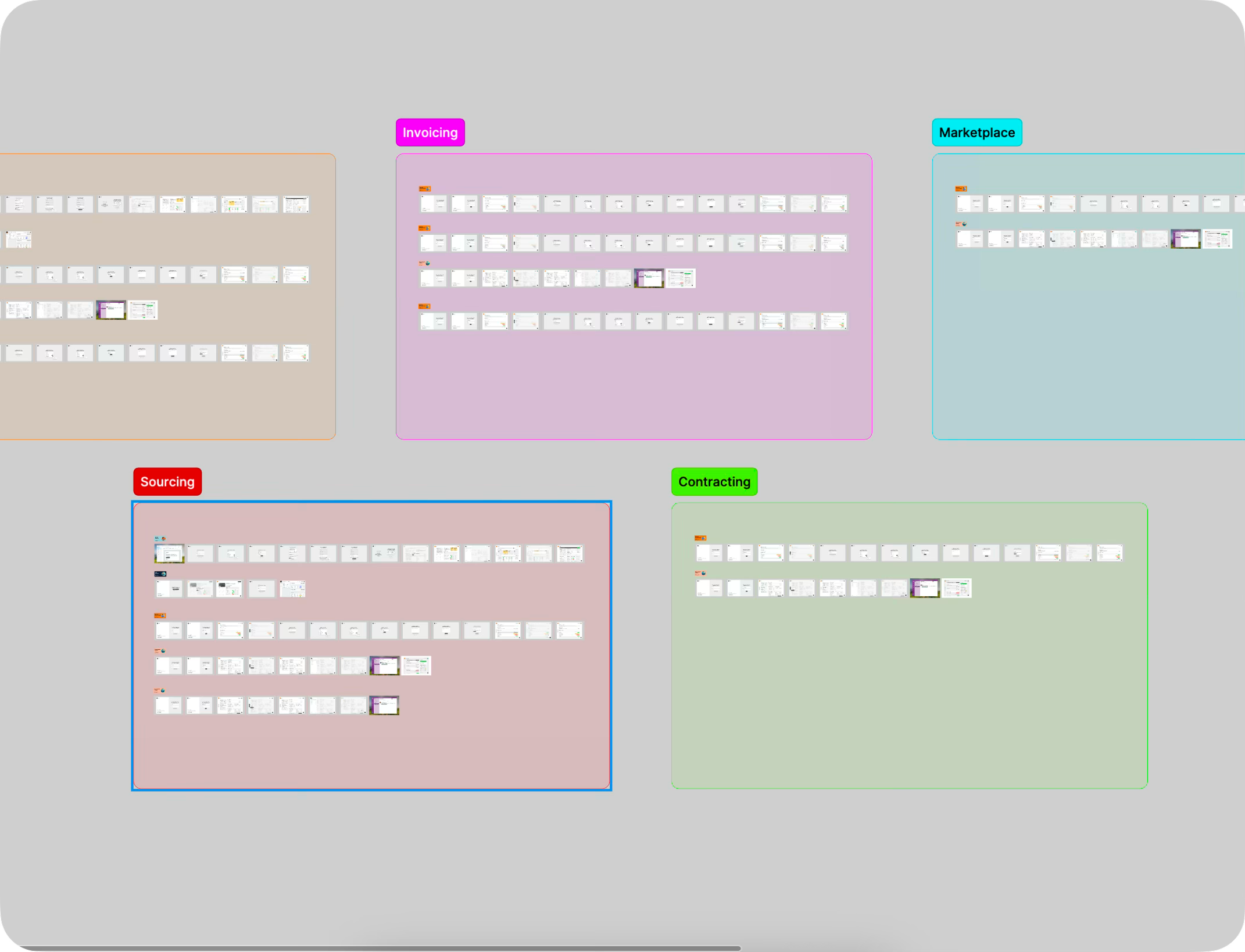
For each journey, we mapped out the simplest possible path to get each user to their desired outcome. We kept a clear user in mind, returning to our personas to ask: what does this person actually want to achieve here? Once we'd stripped the journey back to its essential steps, we moved on to interface design.
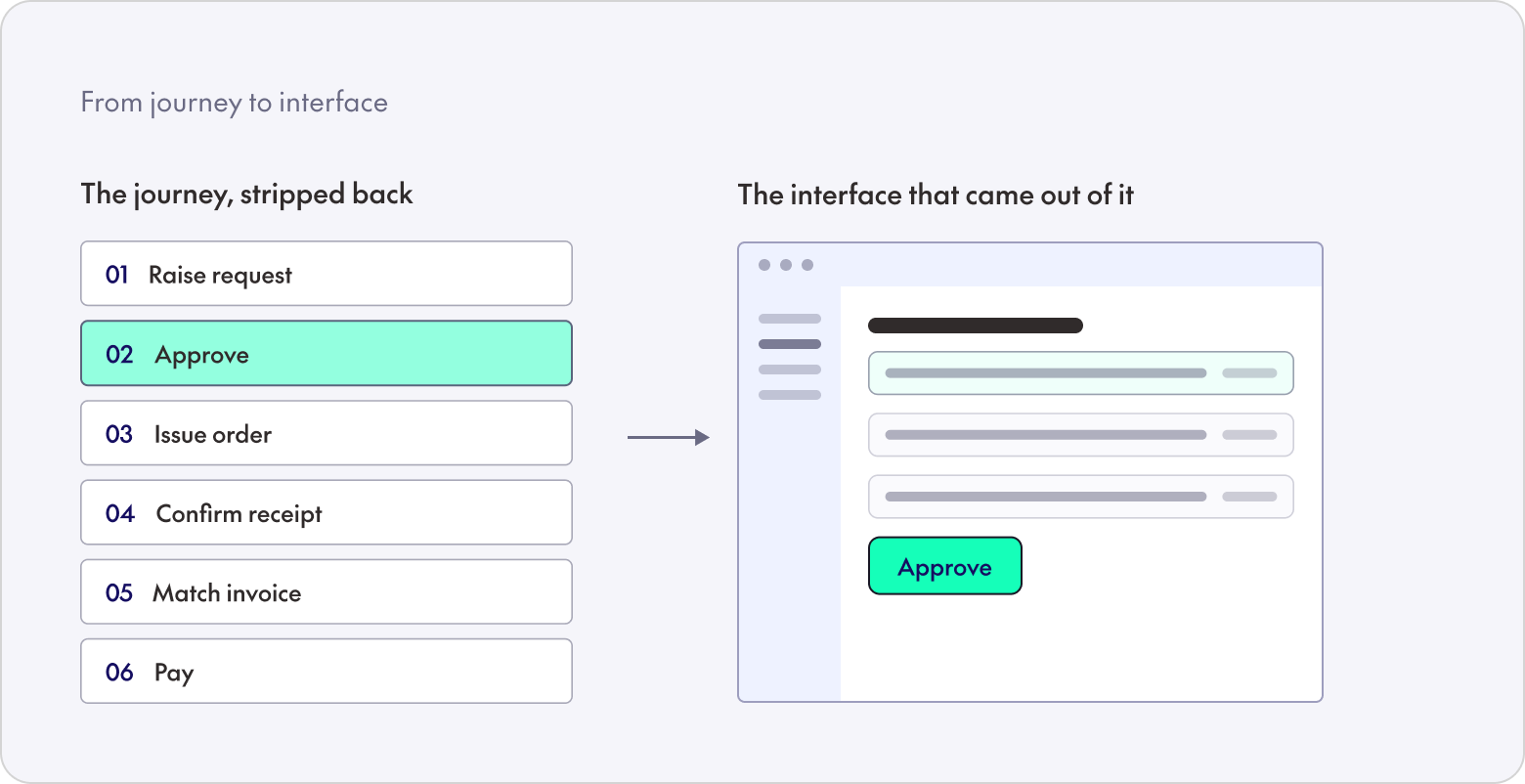
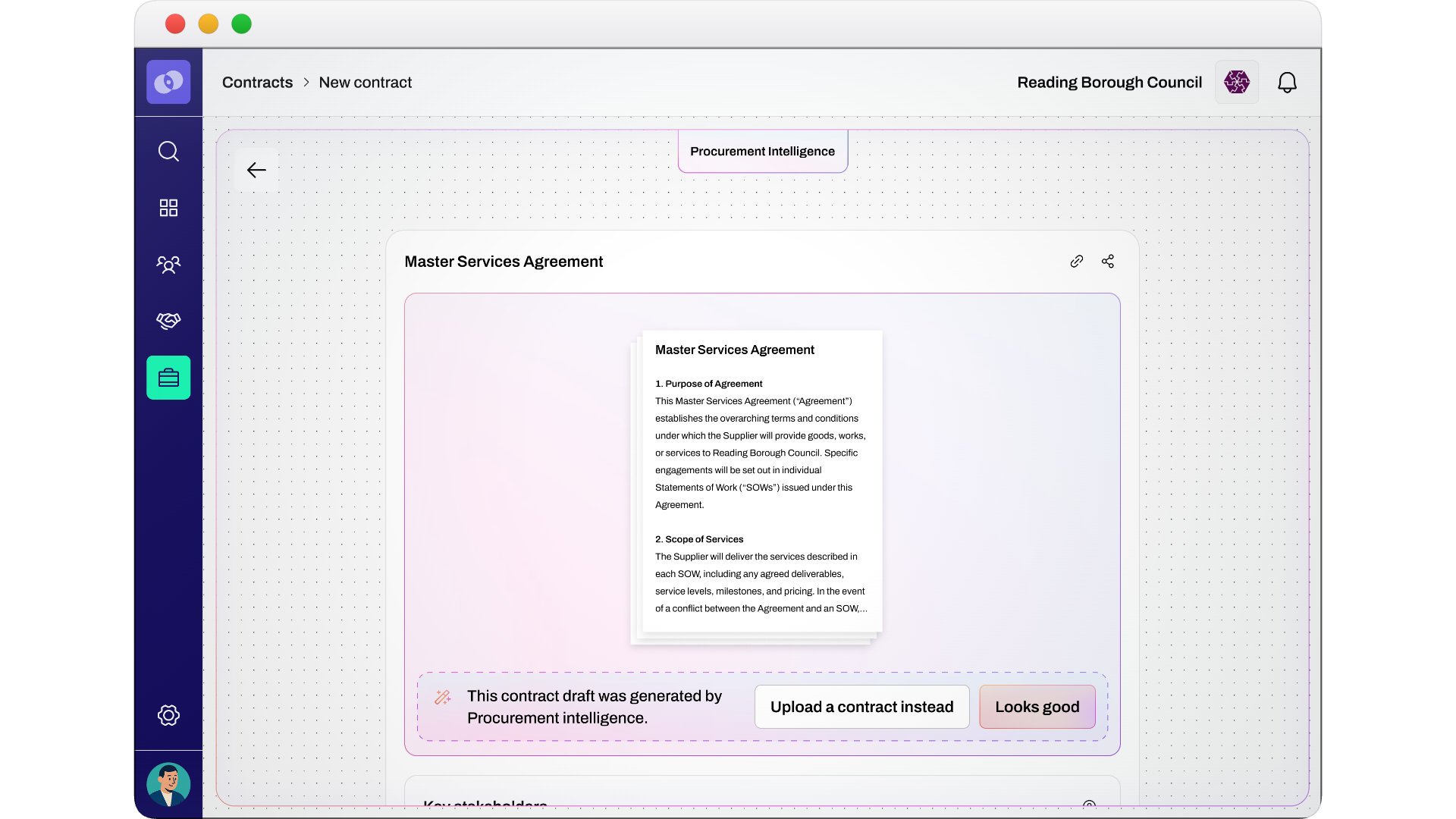
The result was a set of detailed journey designs that covered the full source-to-pay lifecycle, and gave the client's product and engineering teams something concrete to build towards.
Coded prototype
To bring the vision to life, we built an interactive prototype that let the client's leadership and product teams experience the vision rather than just read about it, and to allow for testing, validation and iteration with real customers. Alongside this, we delivered a component library and new design system, giving the engineering team a practical foundation to start building from immediately.
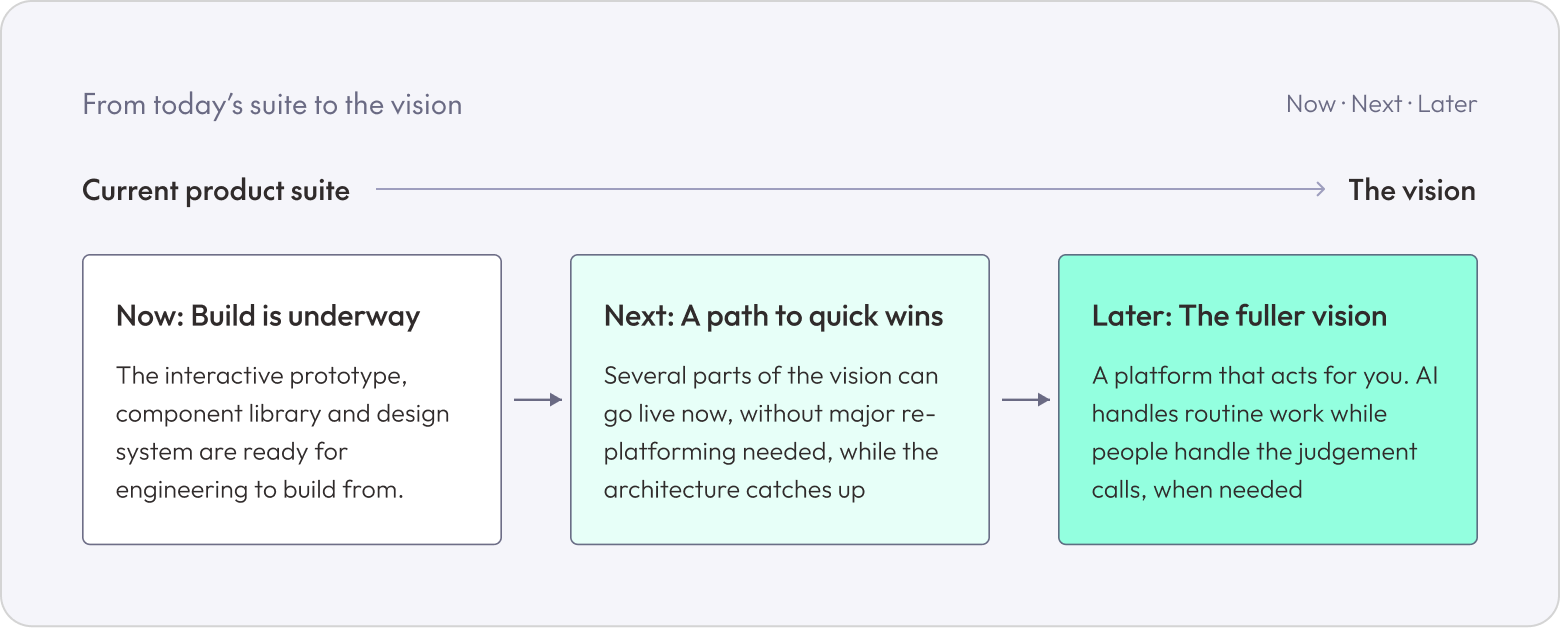
We also mapped a clear path between the current product suite and the vision, identifying where the team could make progress now without major re-platforming, for immediate impact.
Conclusion
The vision gave the client a concrete picture of what its product suite could become. By working through discovery and design incrementally, we moved from a multi-product landscape to a coherent north star: a procurement platform that's unified, modern and genuinely built for the people who use it.
With the vision approved by the board, build is now underway. The infrastructure behind the next generation is in development, and the component library and design system we delivered are providing the foundation teams need to move quickly.


.webp)