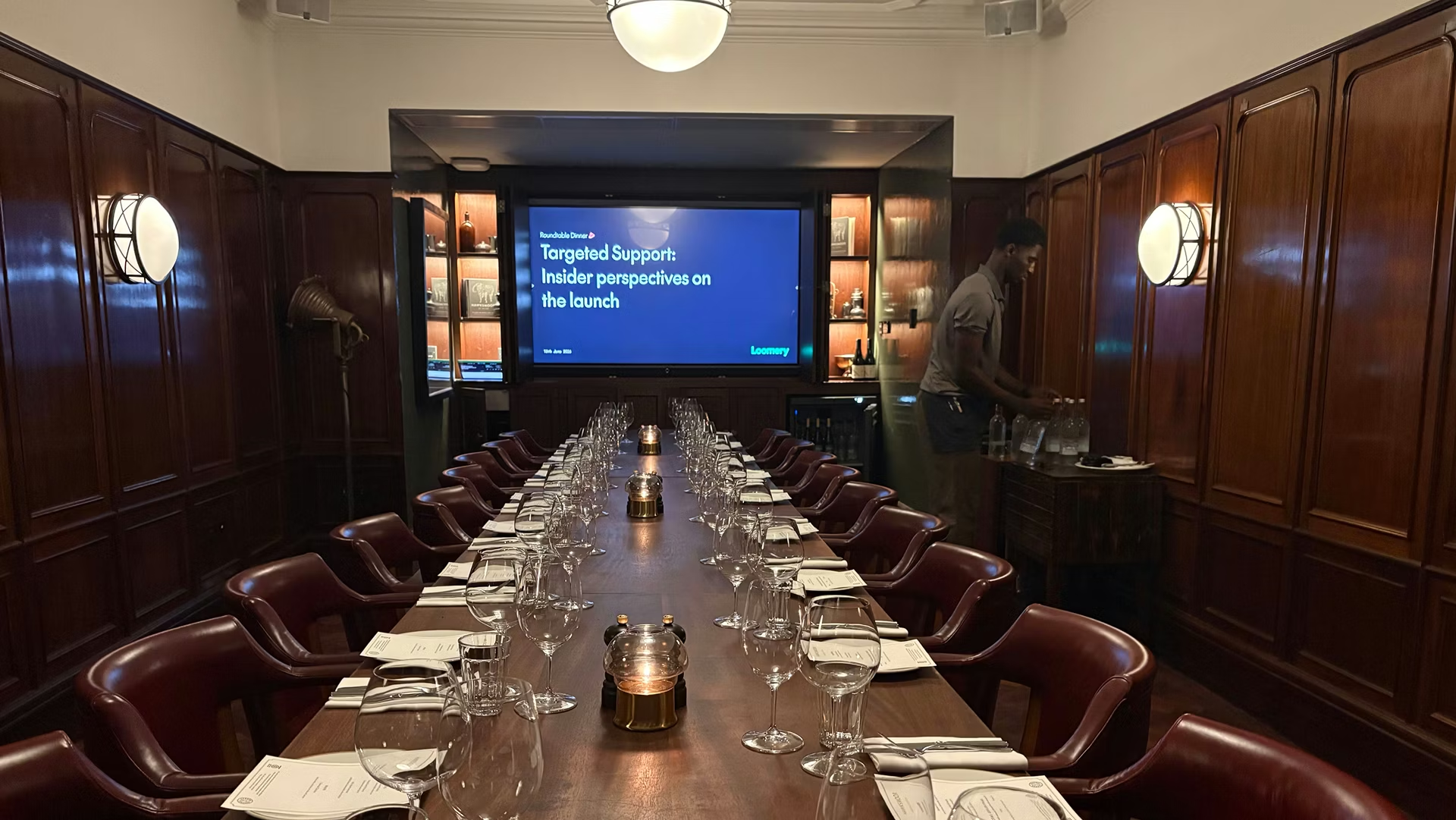
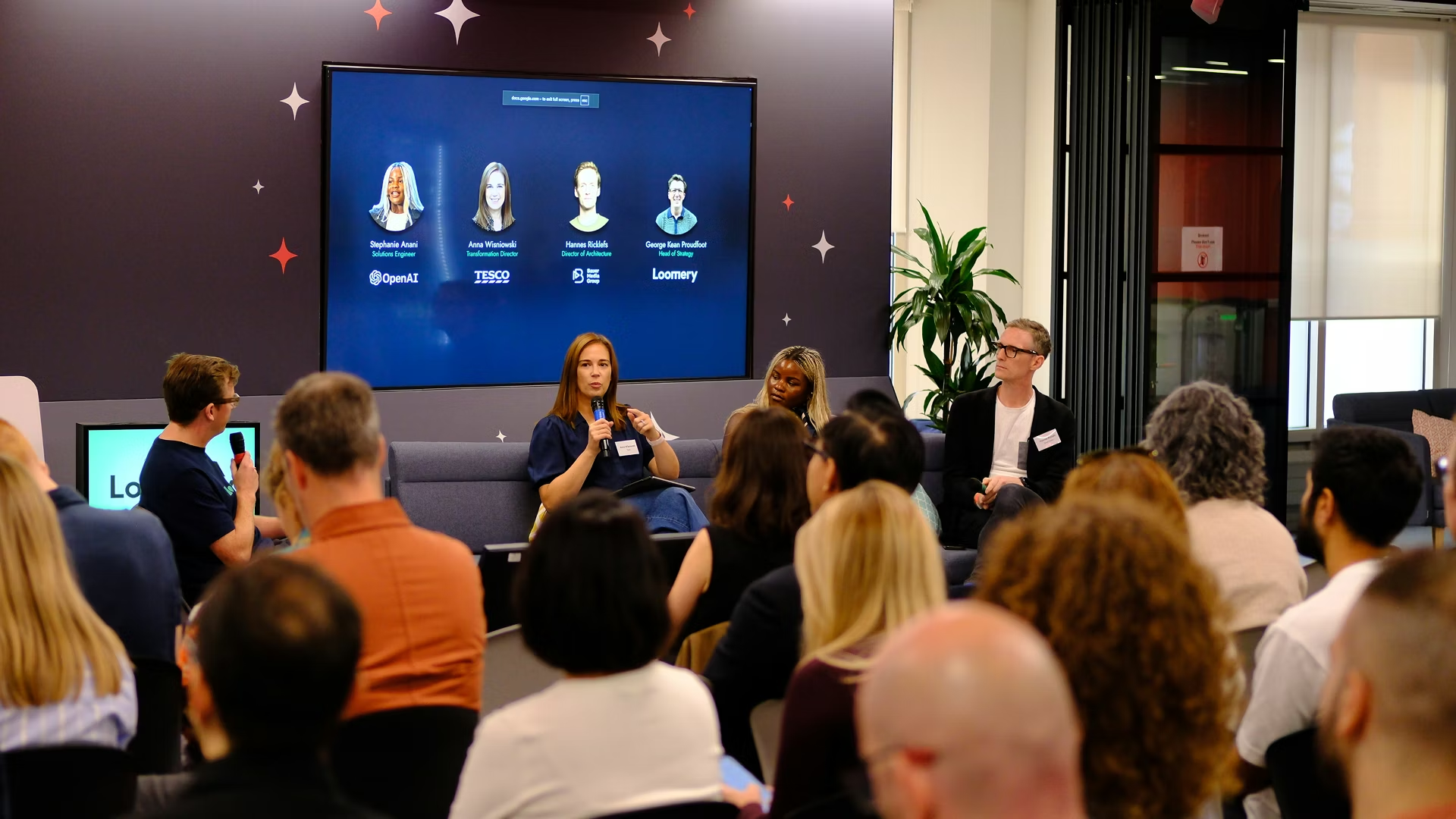
Last week, Loomery hosted a dinner, under the Chatham House rule, with senior proposition, product and digital leaders from a range of UK platforms, banks, wealth managers and challengers to find out what Targeted Support will actually look like.
The framework, which came into force in April, promises to bridge the UK’s massive advice gap, allowing firms to offer proactive, data-driven suggestions to the millions of consumers who don't have a financial advisor. But as the industry encourages a shift from generic guidance to specific recommendations, we wanted to hear how this will be playing out in firms. The dinner was structured around three questions:
What’s the market opportunity and who’s best placed to take it? What will the experience of Targeted Support actually look like? And how will firms deliver these experiences? Here’s what we heard and our takeaways from the session.
There’s real opportunity but the numbers are stark In his opening overview of the regulatory backdrop, Jeremy Fawcett , Head of investment distribution research company, Platforum , set the scene.
The addressable market for Targeted Support is £5.6 trillion. Around 40 million people in the UK either save but don't invest, or do neither. The regulatory direction of travel is clearer than it’s been in a decade. Targeted Support went live in April and a growing list of firms have approvals including Royal London, Aviva, L&G and Monzo.
But run the numbers and the unit economics get tough. For customers at £250k AUM and 2% fees there's £5k per client to play with for acquisition and service costs; at £10k and 0.5% fees firms are down to £50 per client, needing 100,000 customers just to build a £5m business. That ‘lower’ end of the market are the people the FCA are hoping TS will help. But they are the hardest and most expensive to serve, meaning firms have to get the experience right.
Direct platforms are well placed to take advantage, banks may take more time There was broad agreement that established direct platforms (e.g. Hargreaves Lansdown, AJ Bell etc.) are naturally positioned players. They've spent years building out guidance tools, they understand their customers and have the brand trust to make a recommendation feel helpful rather than alarming.
A number of our attendees from these organisations framed Targeted Support as less a new proposition and more a new label for things they're already trying to do. In other words, a new tool in the arsenal to better serve customers. The challenge is using it to push into the mass market rather than just serving existing customers better.
There was less consensus around the readiness of banks to take advantage. Some attendees pointed out their huge customer bases and rich transactional data give them the scale to benefit in the short term. However, several suggested legacy architecture, siloed data models and compliance anxiety could easily neutralise that advantage as they struggle to move fast. Monzo was flagged as a bank that could be an interesting exception: modern infrastructure, a coherent data picture, a track record of clean journeys.
That said, the huge investments that the high street banks have made in data, technology and customer experience are starting to pay off, and their ability to move fast and win market share should not be underestimated.
Changing customer behaviour is the design problem Another key theme we heard was the distance between the PDF of rules and the experience firms have to create to actually change someone's behaviour.
Jeremy opened with a provocation that stuck: ‘education is the industry's favourite silver bullet but it doesn’t resonate. Customers don’t want to sit through a module on the merits of compound interest, they want to be engaged’.
The room surfaced a range of possible approaches but there was no clear consensus winner: goals-based propositions scoped tightly around a specific outcome like retirement readiness; progressive profiling, placing questions at the right moments in a journey rather than front-loading them; behavioural inference from what customers already do on platform; open banking aggregation to build a fuller financial picture.
The naming question also came up. Should "Targeted Support" appear in front of customers at all? The room leaned firmly toward no. The regulatory term is jargon and customers trust a trusted brand’s recommendation, not an FCA label. We’re already seeing early launches from Royal London use ‘Targeted Support’ in places, but also with more marketing friendly lines like ‘ready made investment options’, and ‘get help from our experts’. So it’s clearly a key area to experiment around.
The AI tension is forefront AI’s place in the development of Targeted Support propositions appeared repeatedly. LLMs can make experiences feel genuinely responsive in a way structured questionnaires can't; prototyping now takes days, not months; and many are already asking ChatGPT for financial guidance .
But compliance requires defensible, auditable segmentation logic and LLMs are probabilistic, sometimes opaque, hard to explain to a regulator. One approach Loomery has seen pioneered in healthcare offers a possible way through: neurosymbolic architecture, combining deterministic rule-based logic with the responsiveness of AI, producing experiences that feel intelligent but can still be interrogated and explained. This approach works in highly regulated medical contexts, so may be the model for financial services to pursue too.
The broader point is that regulated brands have something pure AI interactions can't offer: accountability. As one attendee put it, the front-page story of the pensioner who lost everything taking advice from a chatbot is coming, and properly designed Targeted Support in regulated environments should be the answer to AI risk in financial guidance, not a casualty of it. Firms therefore have to balance combining AI while maintaining regulatory confidence.
The regulator and compliance teams are here to help A recurring theme was how collaborative the FCA has been with early movers. Firms already through pre-authorisation described a regulator that is open, pragmatic and genuinely engaged: providing real-time feedback, coming into offices for live walkthroughs of journeys, and letting firms come forward earlier without fully defined plans.
Several felt this had accelerated their process rather than slowed it. The clear implication for the room was that this hands-on support is a first-mover advantage, and likely to thin out as more firms enter the space, leaving later entrants to learn by watching their peers instead.
That collaborative posture extended internally too. The strongest view on compliance was that it should be a partner at the table from day one, not a gate at the end. Done well, compliance and legal act as guardrails that help ship the right products safely, and the firms making real progress are the ones co-innovating with those teams rather than treating them as a blocker.
Start somewhere, but start small The conversation around organisational reality was the most candid part of the evening. Data fragmentation, siloed business units, scattered customer intent data and the question of how to win customer permission to use it, were recurring concerns.
Several attendees are moving deliberately and others are watching for now. But the room did come to a practical consensus: pick a contained, low-stakes use case where if something goes wrong, you can course-correct. Compliance teams should be in the room early as a co-designer, not as a blocker. And getting it right is more important than rushing to be first.
Targeted support is a slow build but the firms that start experimenting now, even on something small, will understand what works as the market matures.
As the reality of Targeted Support becomes more apparent over the next six months we’ll be following up with our attendees to hear how strategies have evolved, and will be convening the same group again towards the end of the year.
In the meantime, if you're thinking about where to start with Targeted Support or would like to join a future event, get in touch .